Independent research · preliminary study
Saudi Arabia and South Yemen
Paths for cooperation and integration
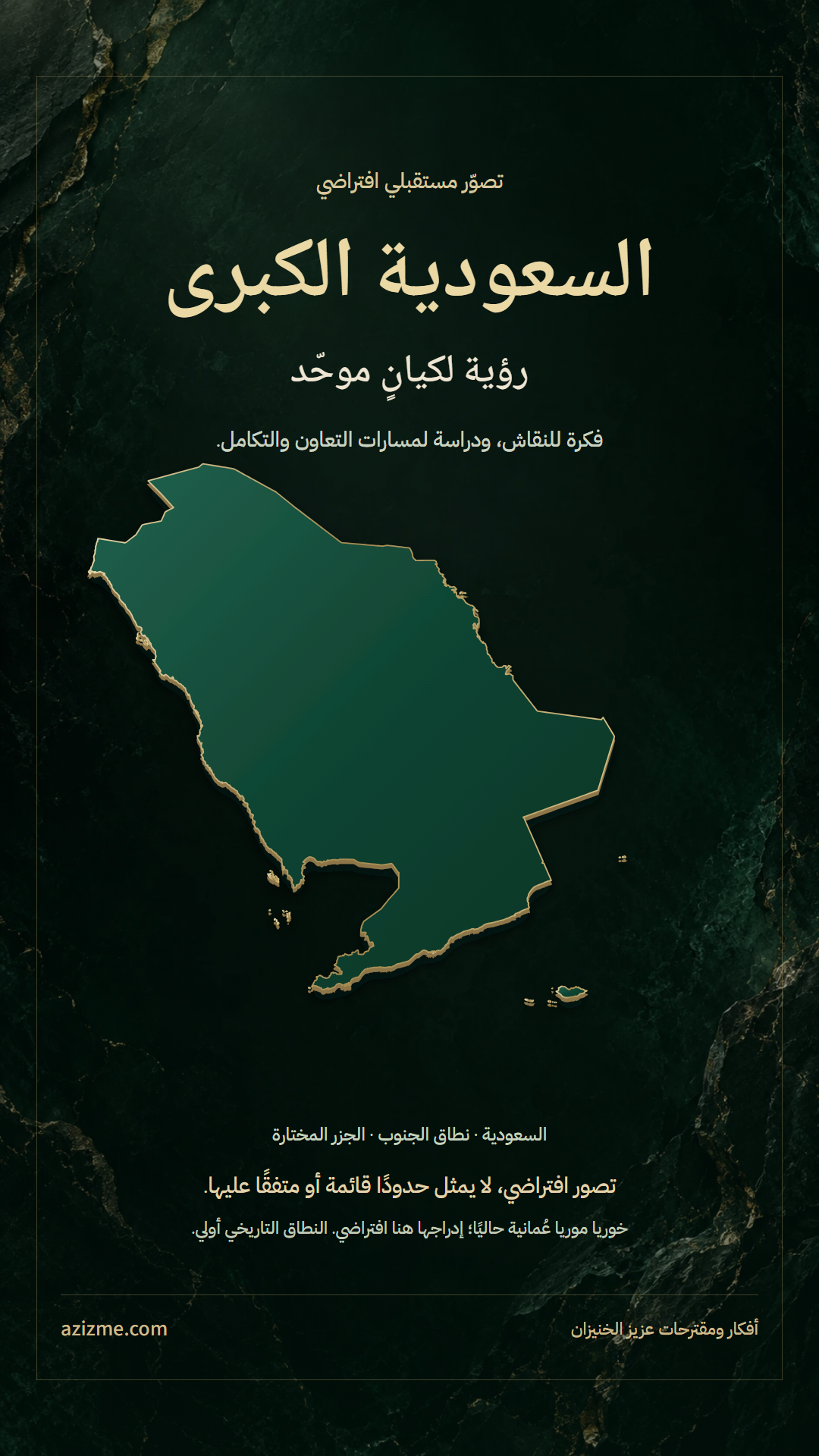
Includes a hypothetical future-union concept titled “Greater Saudi Arabia”.
Prepared by Aziz Al Khunizan · research version 16 October 2026

The question goes beyond the map
Where could Saudi Arabia and South Yemen find shared opportunities in ports, energy, services and employment? Which opportunities need deeper economic cooperation, and what additional value would a political arrangement create?
The preliminary research favors testing economic cooperation and measuring its effects first. Actual net benefit has not been estimated, and the material does not establish public consent or state approval for a union.
Alternatives and conditions to examine
Economic integration
A common market and deeper coordination without assuming a transfer of sovereignty or automatic citizenship. Agreements, funding, implementation capacity and distributional effects need examination.
Hypothetical political union
A scenario conditional on peace, representation, free choice, a lawful process and settled obligations. Khuriya Muriya is currently Omani; its inclusion would require a separate settlement with Oman and protection of residents’ rights.
Comparison with a no-union baseline
The baseline includes continuing crisis costs, possible improvement and projects achievable without a change in sovereignty. No winner is assigned using invented weights.
Greater Saudi Arabia a hypothetical future concept

Selected supporting material
These references illustrate selected themes. A port’s design capacity differs from actual traffic. Historical documents must be read in context and do not establish approval for a future arrangement.